2 - Where Residents Come From
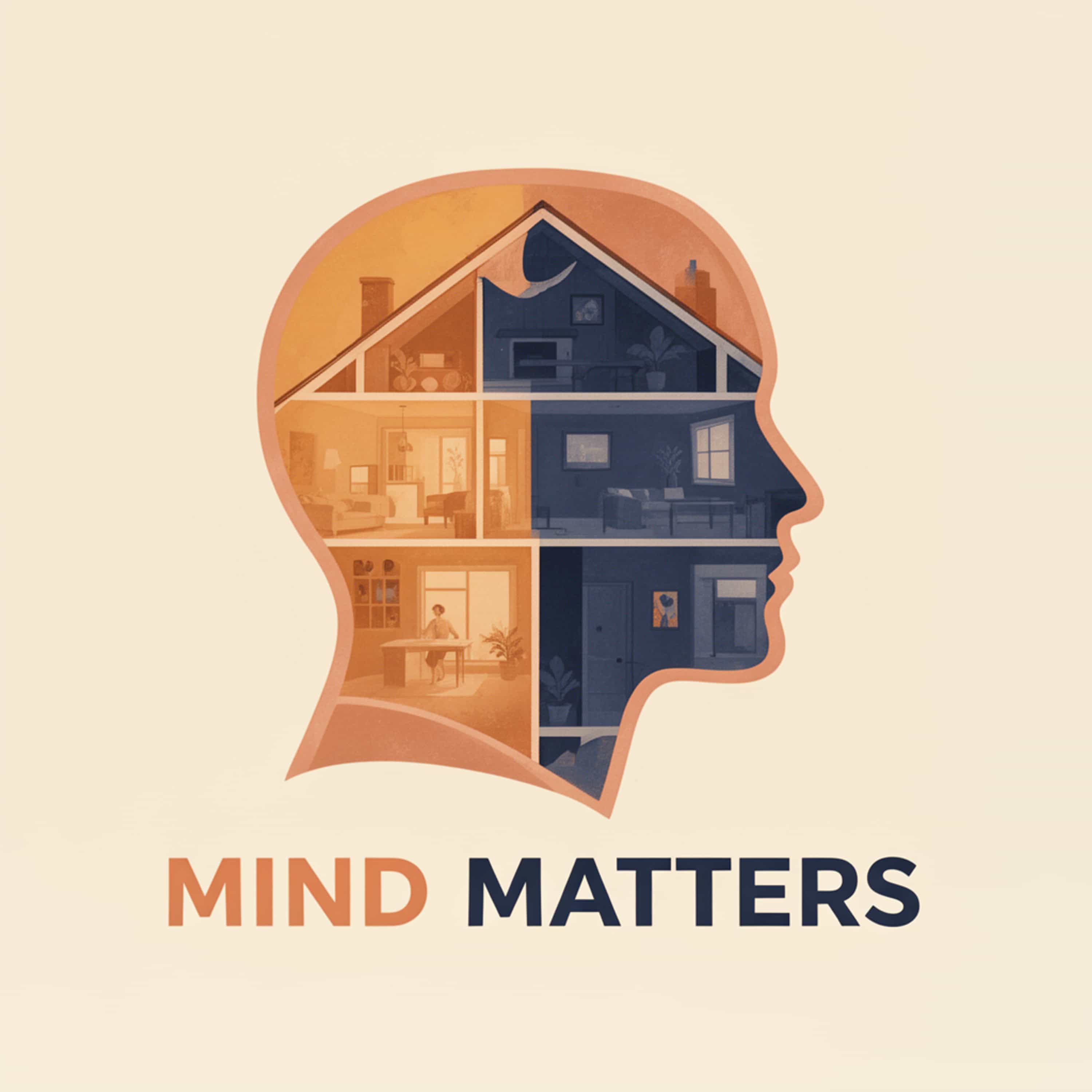
Dr. Toye Oyelese explores how the different 'residents' of our minds are shaped by distinct stages of psychological development. Drawing on Erik Erikson's stages, this episode reveals how early experiences create foundational patterns that echo throughout life, often communicating through our bodies rather than words.
Chapter 1
Erikson's House: The Framework
Toye Oyelese
Welcome back to Mind Matters. I'm Dr. Toye Oyelese, and if you joined me for the last episode, you’ll remember we talked about how the mind’s a bit like a house—full of these internal “residents” that all have their own quirks, their own history. But, ah—have you ever stopped and wondered, where do these residents actually come from? Why does one person end up with a bossy inner critic, while another person's critic hides in the shadows? And, you know, why do some folks get those really harsh inner Protectors, and others have... well, more of a retreat-and-hide type? Interesting, right? That’s what I’d like to peel back today.
Toye Oyelese
Now, when people say, “my childhood shaped me,” it’s usually kind of vague—like, yeah sure, I guess the way you were raised matters, but how exactly? This is where Erik Erikson comes in. Erikson was this wonderful developmental psychologist, and what he did—which always impressed me—was to spell out eight stages that everyone passes through in life. Each stage throws up what he called a ‘crisis.’ Not necessarily a disaster—just a kind of crossroads, a turning point. And how we move through those crossroads? Well, it fundamentally shapes who resides in our internal house.
Toye Oyelese
And here's the twist—the idea I really love: maybe those stages don’t just leave you with a lesson or a scar. Maybe each stage actually leaves behind a resident. You know, a consolidated pattern of thinking, reacting, believing, and, well, basically a set of tendencies that stick around.
Toye Oyelese
I remember my early days as a doctor back in Nigeria—this was before I learned to pronounce half the medications properly, mind you—and I noticed something odd. Patients’ ways of coping, their reactions to big news or setbacks, often felt... familiar. Like echoes. Some folks seemed to handle hard truths with this calm resilience; others bristled, withdrew, or became defensive right away. At first, I just thought it was personality differences, but over time I started noticing these patterns—almost as if early experiences created certain “residents” that showed up years later, still running the show.
Chapter 2
Meeting the Eight Residents
Toye Oyelese
So let’s meet a few of these residents, shall we? Erikson mapped out eight stages—each one stamping a potential new resident into your internal house. We’ll go quickly, so I promise this won’t become a lecture.
Toye Oyelese
First up: Trust versus Mistrust. This is the very beginning—birth to one year, before you have words. Here, you’re figuring out whether the world is safe, whether people can be relied upon. But instead of a voice saying “I trust people” or “I don’t,” what you get is more of a bodily orientation. Some call it a “felt sense.” It’s the kind of thing that speaks through your body—like gut tension around intimacy, or a warm relaxed feeling in safe company.
Toye Oyelese
Then, from one to three years, you've got Autonomy versus Shame. Here, you’re learning whether your will is accepted, or whether you’re made to feel small and wrong for expressing yourself. If that resident is shaped by too much shame, it can hang on to patterns around control, or a constant fear of exposure—some folks grow up feeling like any misstep is disastrous.
Toye Oyelese
The next one is Initiative versus Guilt—about three to six. This resident’s all about your relationship with purpose and direction. Can you reach for things you want, or do you carry this guilt whenever you take up space or pursue something meaningful?
Toye Oyelese
Between six and twelve, it’s Industry versus Inferiority. This is when the Achiever, or maybe the Defeated One, takes form. Patterns about competence, productivity, comparing yourself to others. You know, we see this so much in perfectionism—I remember a young patient in Kelowna, obsessed with straight As. She’d break down over a single B. Underneath, it was a deep, gnawing sense that nothing she did would ever measure up. When we traced it back, it was always about this resident of “inferiority” that had moved in somewhere in late childhood.
Toye Oyelese
Now, twelve to eighteen: Identity versus Role Confusion. This one’s the classic “who am I?” moment. The voice inside that says, “This is what I stand for,” or... maybe, “I have no idea who I am.”
Toye Oyelese
Young adulthood—Intimacy versus Isolation. Patterns around how close you let people get, whether you reach out or wall yourself off.
Toye Oyelese
Then you get to middle adulthood: Generativity versus Stagnation. That’s all about, do you feel you’re contributing, leaving a legacy—or do you feel a bit stuck, wrestling with this worry that nothing you do really matters?
Toye Oyelese
And finally, late adulthood—Ego Integrity versus Despair. That’s the resident who either accepts life as meaningful, whole, or gets haunted by regret and what-could-have-beens.
Toye Oyelese
Notice something? Especially with those earliest residents—they don’t speak in words. They usually express themselves through the body; through sensations, muscle tension, some “vibe” you pick up. That’s not just poetry—it’s neuroscience. Before we have language, our nervous system is already laying down patterns about safety, shame, autonomy. You can’t quite “talk” with these residents, but you sure can feel them.
Chapter 3
The Basement and the Body
Toye Oyelese
Here’s where things get tricky. These residents aren’t independent tenants—they’re stacked. One lays the foundation for the next. So, let’s say your trust resident—formed in your first year—leans more toward mistrust. When you hit the autonomy versus shame stage, guess who’s in the room? Mistrust is that foundation, and every layer builds on top of it. That’s why, when people talk about “old wounds” being stubborn, it’s not just about how old they are. It’s because everything in your house developed in reaction to that early structure. The house isn’t flat, it’s got a basement—and whatever’s in the basement supports or spoils everything above.
Toye Oyelese
And there’s a real dilemma, isn’t there? The earliest residents, the ones from before we had words—they still live downstairs. They don’t speak the language of thoughts or debates. They communicate the only way they know how: through bodily sensation, moods, automatic reactions. When you feel your stomach knot up for no obvious reason before an important conversation, or you meet someone and—snap—there’s an unfounded feeling of unease, that’s your preverbal resident, quietly chiming in from the dark basement.
Toye Oyelese
I’ll admit—before public talks, even after all these years… I get this strange, nervous feeling in my stomach. It’s silly, but sometimes I like to imagine it’s my pre-verbal resident down there, knocking on the pipes and telling me, “Remember: this could be dangerous!” It probably isn’t, but you know, old patterns die hard.
Toye Oyelese
So the question becomes, how do we tune into these nonverbal signals from our oldest residents? The answer might not be dialogue in the typical sense. Maybe it’s about becoming sensitive to states—bodily, emotional, energetic. Noticing patterns, not chasing thoughts. It’s not an easy skill, and I’ll confess, even after decades in medicine and a lot of self-exploration, I still miss these signals half the time.
Toye Oyelese
All right—so, we’ve complicated the picture a little, haven’t we? These residents aren’t random—they’re developmental, layered, and deeply bodily. The house has a history, and every brick rests on what came before. Next time, we’ll dive even deeper: What’s actually going on with this “internal dialogue” we all seem to have, and—more puzzling still—who’s listening on the other end? Until then, keep listening to your own house, even if what you’re hearing isn’t words.